
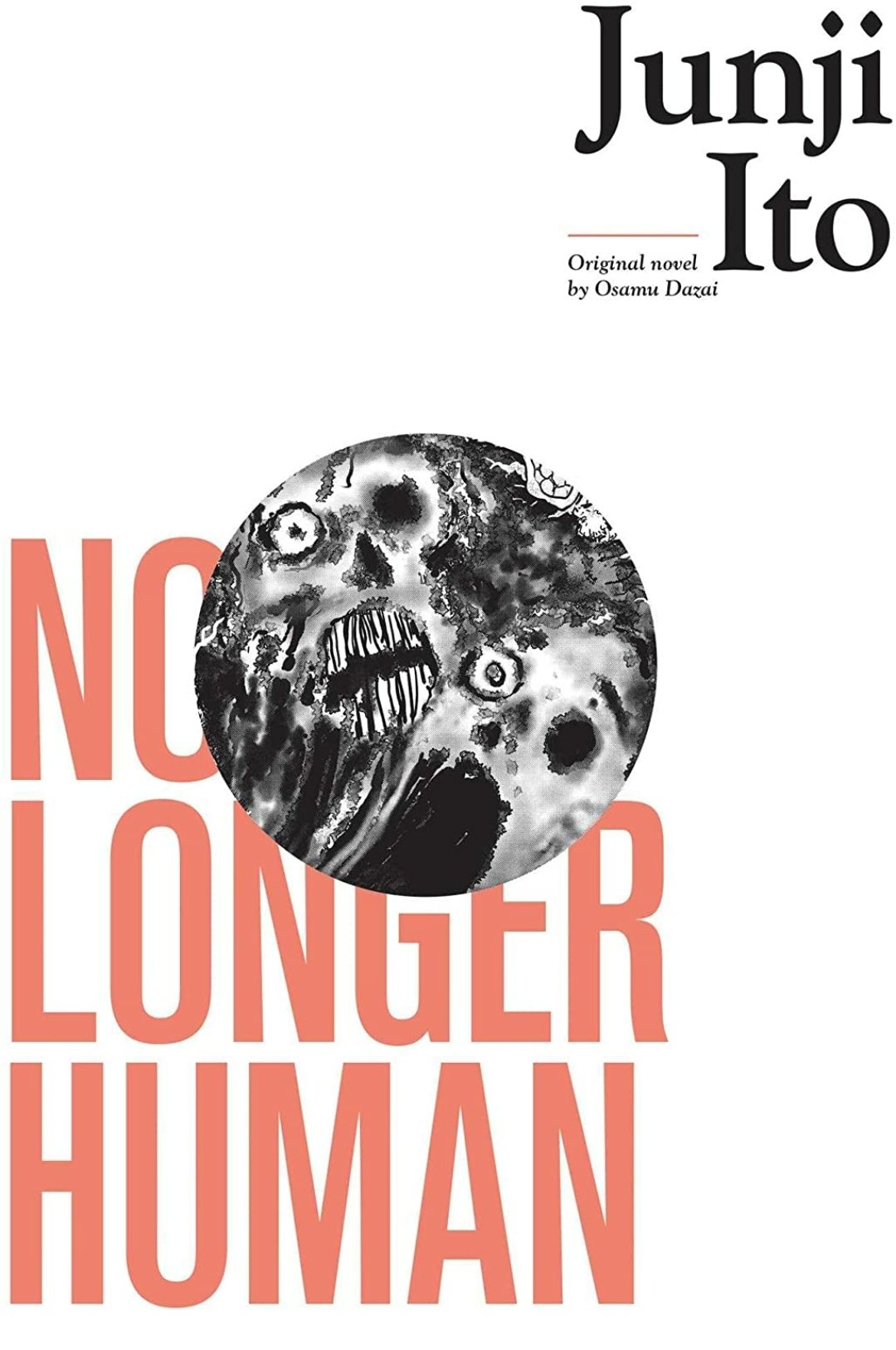
I’ve been on a Junji Ito kick, catching up on some short story collections I never got around to and exploring some of the less typical works, like his memoir Uncanny. Partially this is because many of his works are available in eBook through the Colorado libraries where I still hold borrowing accounts, and partially it’s because I’ve never forgotten a post I once saw in my social media days. The post showed a collage of all the horror books that person had read that year, which was quite a lot, and they noted that, out of all of them, their favorite was a toss-up between One Hand to Hold, One Hand to Carve and Ito’s Tomie. For those unfamiliar with the Japanese horror canon, Tomie as a point of comparison is more or less on par with Stephen King’s Carrie in terms of popularity and influence. What can I say, flattery will get you everywhere with me.
I’ve never been a die-hard Ito fan (although it feels like I should), but neither has his work ever left me disappointed. I never find myself with the urge to yell at his characters, the way we frequently do in western horror when people start making the daft moves that are bound to get them killed. Ito’s characters don’t feel idiotic so much as powerless, swept along in patterns (sometimes literal patterns, as in Uzumaki) that they have no real control over, and that often have nothing to do with them personally. He works for my taste in the same way Jordan Peele does, because I’m just not all that interested in watching characters blow past one red flag after another. It feels like a justification I don’t need, because I don’t come to horror media looking for people to get what they deserve. I just want that good, strong nightmare juice.
Sensibilities being what they are, it makes sense to me that Ito would gravitate toward something like a manga adaptation of Osamu Dazai’s classic novel Ningen Shikkaku, or No Longer Human per its various English translations. Dazai’s autofictional protagonist Yozo Oba (who does ignore his share of red flags, to be completely fair) is a cringe-inducingly great example of a character swept along in the current, not so much because of anything horrific or supernatural going on around him, but because of how he shies away from anything like agency over his own life.
Oba feels real to me because he doesn’t exactly think or make decisions for himself, he just reacts. People come into his life and start casting him in roles that they believe he’ll fill, and all he ever does is either submit to their narrative or run away (usually the former at first, followed by the latter). Anytime he’s forced to look at himself without the aid of someone else’s imposed narrative, he’s horrified by the emptiness he finds, but he never does anything about it. He just looks for the next person to cast him in the next role to save him from the previous one.
I have met more people who move through the world this way than I care to think about. Observing them is one of the most disturbing elements of day-to-day life in the society I inhabit. It’s a glimpse of what it must be like to truly lack free will, to go through life like it’s a pinball machine; in the words of the Castlevania TV series, to “spend sixty years bumping into things and call it a life.” One of the greatest comforts I’ve ever given myself is the knowledge that when the end comes, I won’t look back on my life and have to realize that I was led by the nose through all of it, from beginning to end.
Even more chilling than Oba’s pliability, though, is the tragedy of the way he insists on viewing himself as some kind of violent sociopath when the truth is more that he’s just incredibly cowardly. He wants to be a monster who drives everyone close to him into an early grave, because if he’s a monster then at least he’s something.
I’ve heard it said before that true impostors don’t get “impostor syndrome” in the same way that people do who are genuine, but insecure in their self image due to the way we’re socialized. There may be some truth to this, but I think Oba’s character neatly illustrates that there’s more than one kind of “true impostor.” Far from the hyperconfident, underperforming nepo-babies conjured by the adage, here instead we have someone who has delved into his own impostor syndrome so thoroughly that it consumes him. And so he treads a long road to ruin, shackled to the course by nothing so much as his conviction that there is no other way.
Anyhow, Ito’s art style fits the story quite well and, from my understanding, the manga is a pretty straightforward adaptation of the original text, making it a great way to take in the story as a western reader. Maybe someday I’ll slog through the original, with the book in one hand and my kanji dictionary in the other. Until then, I’m still on my Junji Ito kick.